
Choosing between a tasting menu and fewer courses for a private dinner is a decision about the kind of evening you want, not a decision about which is better. A tasting menu — a progression of many small, beautiful courses — turns the dinner into an experience, with the food as the evening's arc and each course a chapter. A dinner with fewer, larger courses keeps the food generous and the conversation central, with the meal supporting the evening rather than commanding it. Neither is superior; each suits a different occasion, a different table and a different idea of what the night should feel like. This guide compares the two honestly so you can choose the format that fits your evening rather than the one that sounds more impressive.
It is written for hosts weighing the question in Texas and Florida, and reflects how Ambrosía approaches both: every menu written from scratch, the format chosen for your evening, and every detail confirmed with you before anything is booked. The comparison below is what helps you choose a format that serves the night rather than one that simply fills it.
What a tasting menu actually offers
A tasting menu is built around progression. Many small courses — typically five to nine — arrive in sequence, each one a distinct dish designed to be experienced and then yielded to the next. The format turns the dinner into a journey: the courses build on one another, the flavors progress, and the evening has a shape that a larger, simpler dinner does not. The food is the event, and the table experiences it as a sequence rather than as a single meal. For an occasion where the dinner itself is the celebration — an anniversary, a milestone, a special night for two — the tasting format makes the food the centerpiece.
The portions are small by design, so the table can receive many courses without fatigue. This is the format's strength and its constraint: a tasting menu is not a dinner for the hungry in the traditional sense; it is an experience of many flavors in considered portions. Guests who arrive expecting a large, filling meal may leave satisfied but not stuffed, and that is the point — the format prioritizes the progression over the volume. If your table wants abundance above all, the tasting format may not be the right fit.
The pacing of a tasting menu is its own art. Because the courses are many and small, the rhythm is tighter than a three-course dinner — each course lands, is experienced, and yields to the next within a shorter window. The evening still needs room to breathe, but the breathing happens between smaller courses rather than larger ones. A well-paced tasting menu runs two to three hours and feels like an evening; a poorly paced one feels like a parade. The pacing is designed with the format, so the progression has rhythm rather than rush.
What a fewer-course dinner actually offers
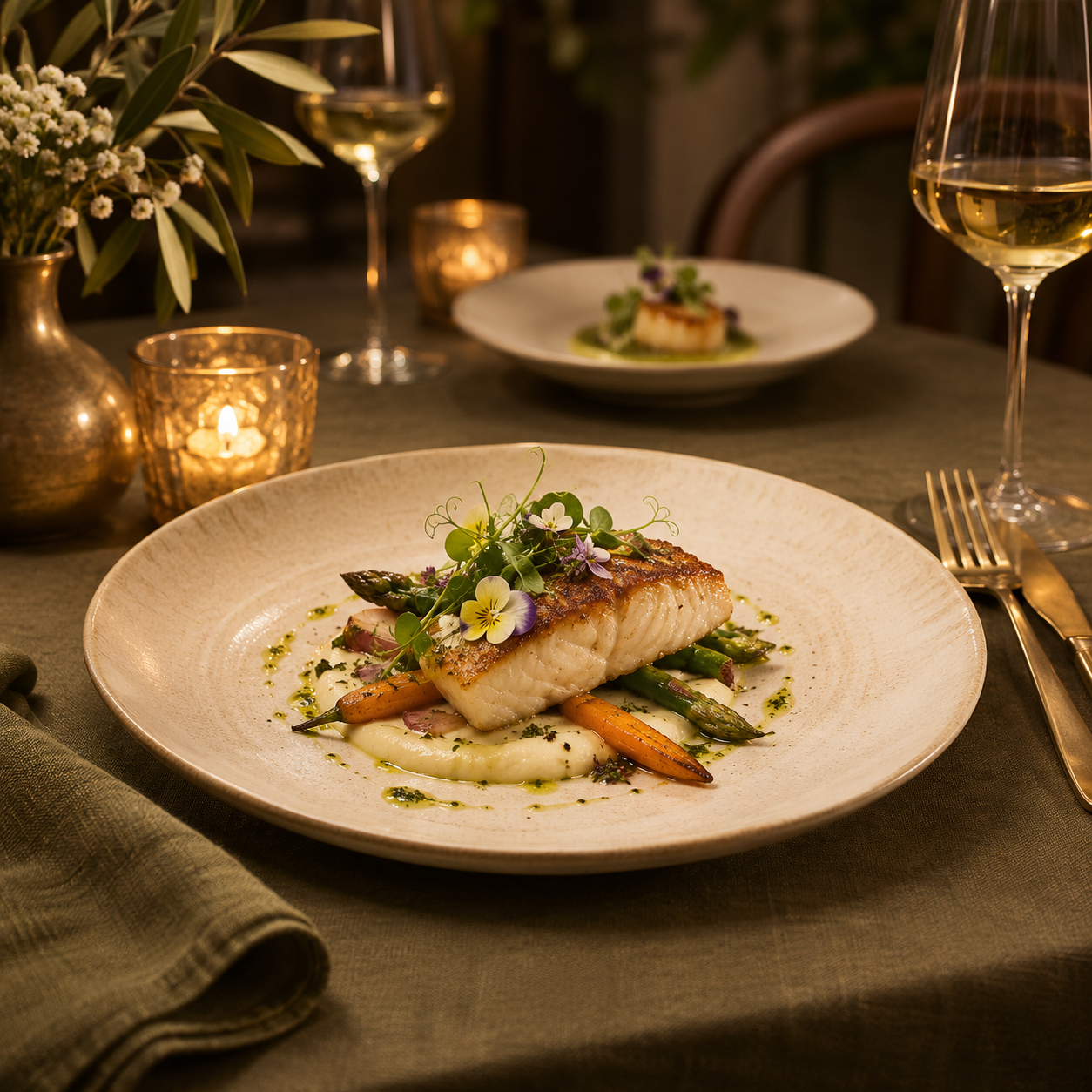
A dinner with fewer courses — typically three, sometimes four — is built around generosity and conversation. The portions are larger, the courses are more substantial, and the meal supports the evening rather than commanding it. The format keeps the food central but leaves the table room to talk, to linger, to enjoy the company without the dinner becoming a sequence to be completed. For an occasion where the gathering matters as much as the food — a dinner party with friends, a family celebration, a relaxed evening — the fewer-course format lets the meal be part of the night rather than the whole of it.
The pacing is looser, because there are fewer transitions to manage. A three-course dinner has a natural rhythm — appetizer, main, dessert — with generous pauses between each, and the table sets the pace more than the kitchen does. The evening feels relaxed rather than structured, and the conversation has room to develop without the next course arriving to move it along. This is the format for a table that wants to enjoy the meal and each other in equal measure.
The trade-off is that the dinner has less of an arc. A three-course dinner is a meal, beautifully done; a tasting menu is an experience, progressively built. If the evening is about the food as a journey, the fewer-course format may feel too simple; if the evening is about the table and the food in equal measure, the fewer-course format is often the better fit. The choice is about what the evening is for, and the chef explains how each format would run in your specific home.

Match the format to the occasion
The occasion is the first filter. An anniversary dinner for two often wants a tasting menu, because the food is the celebration and the progression gives the evening a shape. A dinner party for eight often wants a three-course dinner, because the gathering is the event and the food supports it. A milestone birthday could go either way: a tasting menu if the dinner is the gift, a three-course dinner if the dinner is the prelude to a larger celebration. The format follows the occasion, not the other way around.
The table's character is the second filter. A table that loves food and wants to experience the chef's range gravitates toward a tasting menu; a table that loves conversation and wants the meal to be one part of the evening gravitates toward fewer courses. Neither preference is wrong, and the format should serve the table rather than the chef's ambition. A host who chooses a tasting menu to impress a table that wanted a relaxed dinner produces an evening that feels performative rather than generous.
The evening's length is the third filter. A tasting menu needs time — two to three hours — because the progression requires room to breathe. A three-course dinner can fit a shorter evening more comfortably, because there are fewer transitions to pace. If the evening has a fixed end — a babysitter, a venue window — the format should fit the time you actually have. A shorter format executed beautifully always feels better than a longer one squeezed in, and the honest conversation about format and time happens during the consultation.

Cost, kitchen and what each format demands
Cost is where the formats diverge, and it is worth understanding honestly. A tasting menu is typically quoted per person and reflects the labor of many courses — the planning, the mise en place, the live execution of each dish in sequence. A three-course dinner is often lower per person because there are fewer courses to produce, though the portions are larger. The comparison should be total to total and scope to scope, and a proper proposal itemizes what each format includes so you can choose on substance rather than on a single number.
The kitchen demands differ too. A tasting menu, with its many courses fired in sequence, demands tight timing and a kitchen that can produce small dishes rapidly and in order. A three-course dinner, with its fewer transitions, is more forgiving of a home kitchen's pace. If your kitchen is compact or has limited equipment, the fewer-course format may fit it more naturally, while a tasting menu may need a menu designed around the kitchen's constraints. The chef assesses the kitchen during the consultation and recommends the format the space can support.
Staffing follows the format. A tasting menu for two may be one chef who cooks and serves; a tasting menu for eight may need a chef and a server to keep the progression moving. A three-course dinner for eight may need similar staffing, because the larger portions and the service between courses still demand hands. Neither format is inherently lighter; the staffing is named in the proposal, not discovered on the night. At Ambrosía, every quote is personalized — built from your menu, your count and your venue — and confirmed with you before booking.
Questions to ask before you choose
Once you understand the two formats, the practical questions are what separate a good fit from a forced one. What is the evening for — a celebration of the food, or a gathering the food supports? How long is the evening, and does the format fit the time? What does the table want — a journey of many flavors, or a generous meal with room to talk? What can the kitchen support, and does the format fit the space? A chef who asks these questions before recommending a format is doing the work; one who recommends a tasting menu by default is selling.
Dietary needs interact with the choice. A tasting menu can accommodate variety beautifully, because each course is small and built to specification, but it needs clear communication of needs in advance. A three-course dinner accommodates variety well too, with larger substitutions designed for each guest. If dietary needs are a significant part of your table, the format that controls the plate most directly may be the better fit, and the chef advises on this during the consultation.
Finally, ask about the evening's arc. A tasting menu has a built-in progression that gives the night a shape; a three-course dinner has a simpler arc that leaves more room for the table to set its own rhythm. If the evening has fixed moments — a toast, a speech — the format that flexes around them naturally may be the better choice. The format should serve the evening, not the other way around, and the right choice is the one that lets the night unfold the way you imagined it. Share your date and venue through the inquiry page or call (469) 268-9100 to begin.
Frequently asked questions
What is the main difference between a tasting menu and fewer courses?+
A tasting menu is a progression of many small courses that turns the dinner into an experience; a fewer-course dinner is a generous meal with larger portions that keeps the conversation central. One is a journey; the other is a meal.
Which format is better for an anniversary dinner for two?+
A tasting menu often suits an intimate anniversary, because the food is the celebration and the progression gives the evening a shape. A three-course dinner also works if the table prefers a simpler, generous meal.
Which format is better for a dinner party with friends?+
A three-course dinner often suits a gathering, because the meal supports the conversation rather than commanding it. A tasting menu works if the table wants the food to be the event.
Is a tasting menu more expensive?+
Often yes per person, because many courses reflect more labor, but the comparison should be total to total and scope to scope. A proper proposal itemizes what each format includes.
How long does each format take?+
A tasting menu typically runs two to three hours; a three-course dinner can fit a shorter evening more comfortably. The format should fit the time you actually have.
Can dietary needs be accommodated in either format?+
Yes — a tasting menu builds each small course to specification; a three-course dinner designs larger substitutions. Share needs during the consultation so they are built in.
How do I choose the right format for my evening?+
Share the occasion, the table's character, the evening's length and your kitchen during the consultation. The chef recommends the format that fits your evening and confirms it with you before booking.
Source notes
- ✦Format comparison reflects standard private-dinner practice; specific staffing, timing and scope always depend on the event and venue.
- ✦Dietary-handling guidance reflects general food-safety practice; share needs during the consultation so they are built into the menu.
- ✦All Ambrosía private dinner menus are written from scratch and the format is confirmed with the host before booking.