

Hiring a private chef to cook in your home is one of those experiences people imagine as reserved for restaurants or television. In practice it is a straightforward, well-defined service: a professional chef plans a menu with you, shops for the ingredients, cooks in your kitchen, serves the meal and leaves the space tidy. What you are really buying is the evening itself — the hours you would have spent planning, cooking and cleaning, returned to you and your guests.
This guide explains what an at-home private chef experience can include, how a typical booking unfolds from first message to final plate, and what to prepare so the night runs smoothly. It reflects how Ambrosía works in homes across the Dallas area: menus written from scratch for your table, never pulled from a fixed list.
The consultation: shaping the menu before anything is cooked
Every private chef booking starts with a conversation, not a contract. You share the occasion — an anniversary, a birthday, a business dinner, a Tuesday that deserves better — along with the date, the number of guests and anything your table cannot or will not eat. The chef asks the questions that matter: Is there a dish with history for you? Do you want a tasting progression or a generous three courses? How adventurous is this table, really?
From your answers, the chef writes a proposal: a menu built for your evening, with courses described plainly, wine-pairing notes if you want them, and a quote that itemizes food, service and travel. Nothing is locked until you approve it. This is the stage where a from-scratch kitchen earns its difference — a menu that references your favorite cuisine, your garden's tomatoes in season, or the dish you had on your honeymoon, rather than a package labeled 'menu option B.'
Expect the consultation to also cover the practical layer: your kitchen's equipment, parking, timing for courses, and how you want the table set. Ten minutes of honesty here — 'my oven runs hot,' 'we eat early,' 'my father-in-law distrusts fish' — buys you a night that feels effortless.
What the chef does before ringing your doorbell
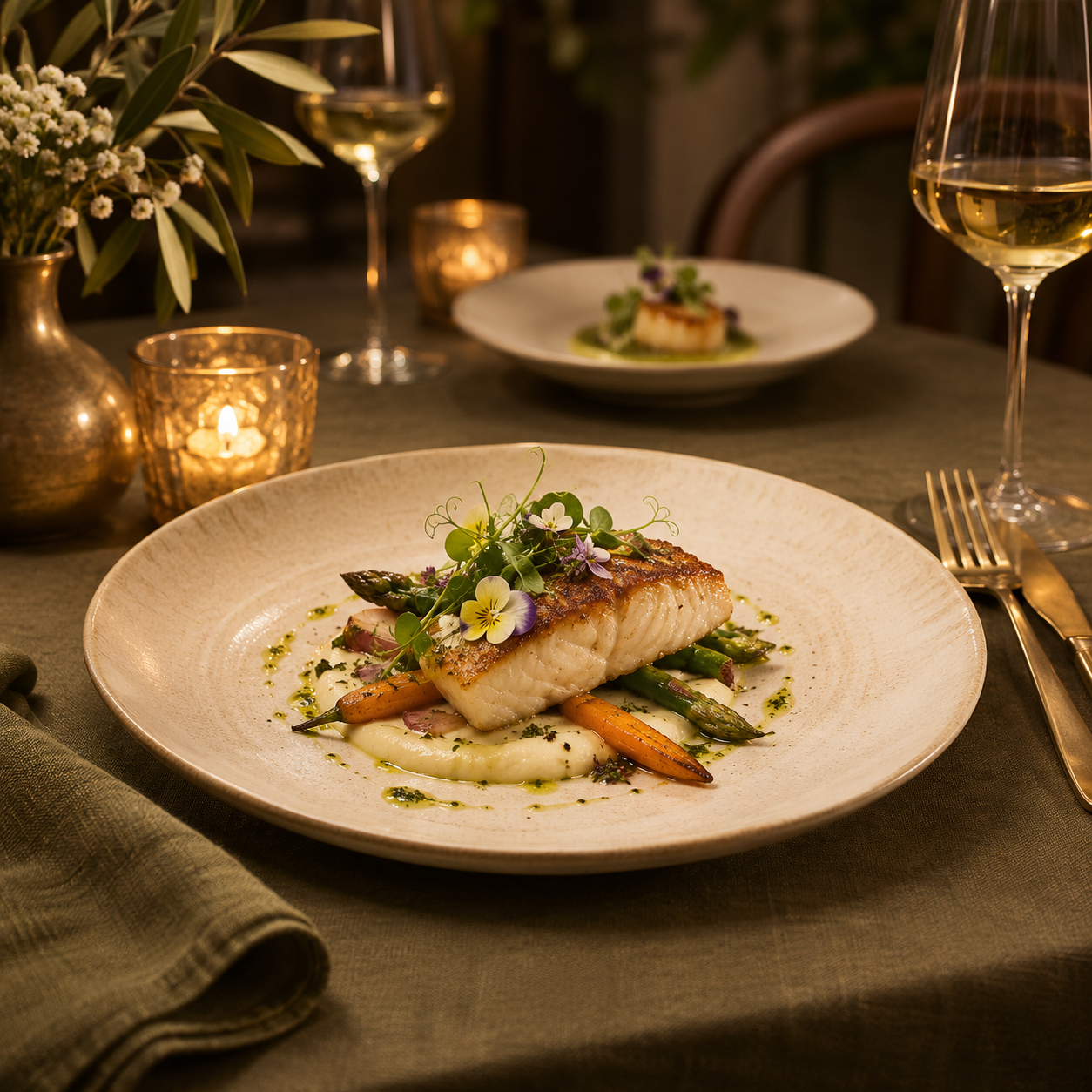
The visible part of private chef service is the cooking; the invisible part is most of the work. After you approve the menu, the chef sources ingredients — often the same day, prioritizing peak-season produce, proper proteins and the specialty items your menu calls for. Shopping is done with your kitchen in mind: quantities matched to your guest count, nothing ordered that your equipment cannot execute.
Preparation is staged in advance wherever it improves the final result. Stocks, sauces, marinades and doughs that benefit from time are made ahead; delicate components are reserved for your kitchen so they arrive at their best. The chef arrives with a plan of the evening mapped to the minute — what fires when, which pan, which burner — because cooking in an unfamiliar kitchen is a skill, and the good ones make it look like the room was built for them.
You will typically receive a short arrival note the day before: what time the chef lands, what they will need (counter space, oven access, a place to wash up), and the service timeline for the evening. If anything in your kitchen changed — a broken burner, a borrowed appliance — that is the moment to mention it.

The experience at the table
On the night itself, the experience can be shaped two ways. In the full-service format, the chef plates each course in your kitchen and serves it to the table, describing what you are eating and answering questions between courses — dinner unfolds like a tasting counter that happens to be in your home. In the quieter format, courses are plated and set for you to serve, and the chef stays in the background, emerging for the finale.
Either way, the rhythm is deliberate. Courses are paced so conversation breathes between them; hot dishes land hot, cold dishes stay cold, and the table never waits on a kitchen it cannot see. If you have asked for pairings, each course arrives with its pour and a one-line reason why. Children at the table, a toast mid-meal, a guest arriving late — a seasoned private chef absorbs all of it without the evening losing its shape.
The most common reaction hosts describe is a strange, pleasant disorientation: their own home, but with the attention of a restaurant. That is the product. You are present for your own dinner party in a way that is nearly impossible when you are also the kitchen.

Dietary requests, one table at a time
At a private dinner, dietary requests stop being a logistics problem and become a design input. With six guests, the chef can know each person's needs by name and build a menu where the vegetarian, the gluten-free guest and the spice-averse uncle all eat the same celebratory arc — not a parallel, lesser version of it. Substitutions are designed, not improvised.
This is also where honesty pays. Allergies, religious requirements and medical restrictions are handled with full seriousness and separation protocols; preferences are simply folded into the menu's personality. The consultation is the place to be precise — 'celiac, needs dedicated prep' is a different sentence from 'prefers to avoid bread.' A from-scratch kitchen can honor both, but only if it knows which it is planning for.
Because every menu is written for the occasion, requests that would be impossible at scale — a fully vegan tasting menu, a dish recreating a family recipe, a course built around a garden harvest — are ordinary work at a private table. If you have an unusual request, bring it early; the best versions of these menus are the ones the chef has time to think about.
Cleanup, follow-up and what it costs
The evening ends the way a good restaurant evening does: you stay at the table. The chef clears the service ware, leaves the kitchen clean — counters wiped, dishes done or loaded, floors swept — and takes the trash generated by the service. What remains is your home, exactly as it was, plus the memory of the meal.
A few days later, a good chef follows up: what the table loved, what surprised them, whether any recipe deserves a second life. Many private chef relationships grow from there — a quarterly tradition, a monthly date-night standing booking, or a bridge into weekly meal prep during a busy season. The first dinner teaches the chef your table; every dinner after that starts further ahead.
On cost: private chef service is typically quoted per event or per person, covering the chef's time, groceries, service and travel. It is not inexpensive, but it is also not a mystery — a proper proposal itemizes every component so you know exactly what you are choosing. At Ambrosía, your submission is an inquiry, the menu is confirmed with you before anything is booked, and availability is confirmed individually for each date.
Frequently asked questions
Do I need a large or professional kitchen?+
No. Most home kitchens are fully workable. The consultation covers your equipment and the menu is designed around what your kitchen can do.
Does the chef do the dishes?+
Yes. Cleanup of the cooking and service areas is part of the service — you should end the night at the table, not at the sink.
Can you handle allergies and dietary restrictions?+
Yes, and with care: allergies and medical restrictions get separation protocols, preferences get folded into the menu. Be specific during the consultation.
Do you shop for the groceries?+
Yes. Ingredients are sourced by the chef, matched to the approved menu and your guest count. Grocery cost is itemized in your quote.
How many guests can a private chef serve at home?+
Intimate dinners of two to a dozen are the classic format; larger home gatherings are possible depending on your space and service style. Share your headcount and the chef will confirm what fits.
How far in advance should I book?+
Two to four weeks is comfortable for most dates; peak weekends benefit from more notice. Availability is confirmed individually for each date.
Do you offer wine pairings?+
Pairings can be included on request, with notes for each course. Mention it during the consultation so the menu and the list are planned together.
Source notes
- ✦Describes the standard in-home private chef workflow as practiced by Ambrosía in the Dallas area.
- ✦Dietary-handling notes reflect general food-safety practice for home service.
- ✦Every menu is written from scratch and confirmed with the host before the event.